Stop Buying a Postcode. Start Buying a Life.
Lifestyle & living
8 minutes
August 5th, 2026
Stop Buying a Postcode. Start Buying a Life.
Let me start with something that happened recently.
I went for dinner in Kilimani, it was a nice restaurant & good evening. Walking back to my car, I passed women positioned along the road whose presence made it clear that this street, however prestigious its address, had become something other than a residential neighborhood. Not a bar. Not a nightlife strip. A residential street. One of those streets where people have invested millions of shillings to live or to build their financial future.
I wasn't shocked. I was unsurprised. And that's the problem.
That is what happens when you flood a neighborhood with transient occupancy, build for short stays instead of real life, and call it a prime address.
The Product Being Built Isn't for Families
Look at what's going up across Westlands, Kilimani, and Kileleshwa right now. Studios. One-beds. Two-beds. Rooftop pools. CGIs that look magnificent. Building after building, all chasing the same short-stay tenant, the same Airbnb investor, the same diplomatic-corridor pitch.
Kilimani and Westlands alone now have hundreds of active short-term rental listings. The honest reality? Supply has exploded and parts of these areas are genuinely oversupplied — generic apartments competing on price in a race nobody wins. Westlands apartment prices fell 11.5% in 2025. Properties are being sold at discounts of up to 20%. Vacancy rates in parts of Kilimani are climbing.
And the cranes are still going up.
None of this product is designed for a family that wants to actually live somewhere. It is designed for people passing through. And when you build a neighborhood for people passing through, you get exactly the kind of street I walked down in Kilimani.
The Tax Nobody Talks About
Living in these "prime" areas comes with a cost that never appears on any investment prospectus: your time.
Nairobi is ranked among the most traffic-congested cities globally. A 10km commute takes an average of 1 hour 18 minutes — nearly double the equivalent journey in London. Commuters in Westlands have said it plainly: "There's no such thing as off-peak anymore."
That is hours of your life, every single day, sitting in exhaust fumes, arriving at work already worn down, coming home too depleted to be present for your family. That's the hidden tax of the prime address.
At Tilisi, residents who live and work within the development don't feed that machine at all. The road infrastructure was planned, not inherited from a city that grew faster than anyone could manage.
The Walk You Deserve
When did you last walk around your neighborhood without thinking about it?
Not a workout. Just a walk where your mind settles, your kids move ahead of you freely, and you don't pull your dog away from a boda boda every thirty seconds.
That walk doesn't exist in most of Nairobi's dense corridors. The streets weren't designed for people. They were designed for vehicles.
Tilisi has a 6.8km natural jogging track. Dedicated cycling paths. Pedestrian walkways built into the masterplan from day one. No speeding traffic sharing your space. No carbon fumes at face level. No noise following you home.
This isn't a lifestyle extra. It's the basic standard of living that you've earned and shouldn't be negotiating away for a familiar postcode.
Your View in Ten Years
Here's a conversation I've heard too many times from owners in Lavington, Kileleshwa, and Kilimani: "When I bought here it was different. Then they put up a tower next door."
That's not bad luck. That's the predictable outcome of an uncontrolled environment.
There is nothing stopping a developer from buying the plot next to yours tomorrow and building a 20-storey block that eliminates your light, your view, and the quiet you paid for. It happened in Lavington. It happened in Kileleshwa. Entire streets that had character a decade ago are now walls of concrete.
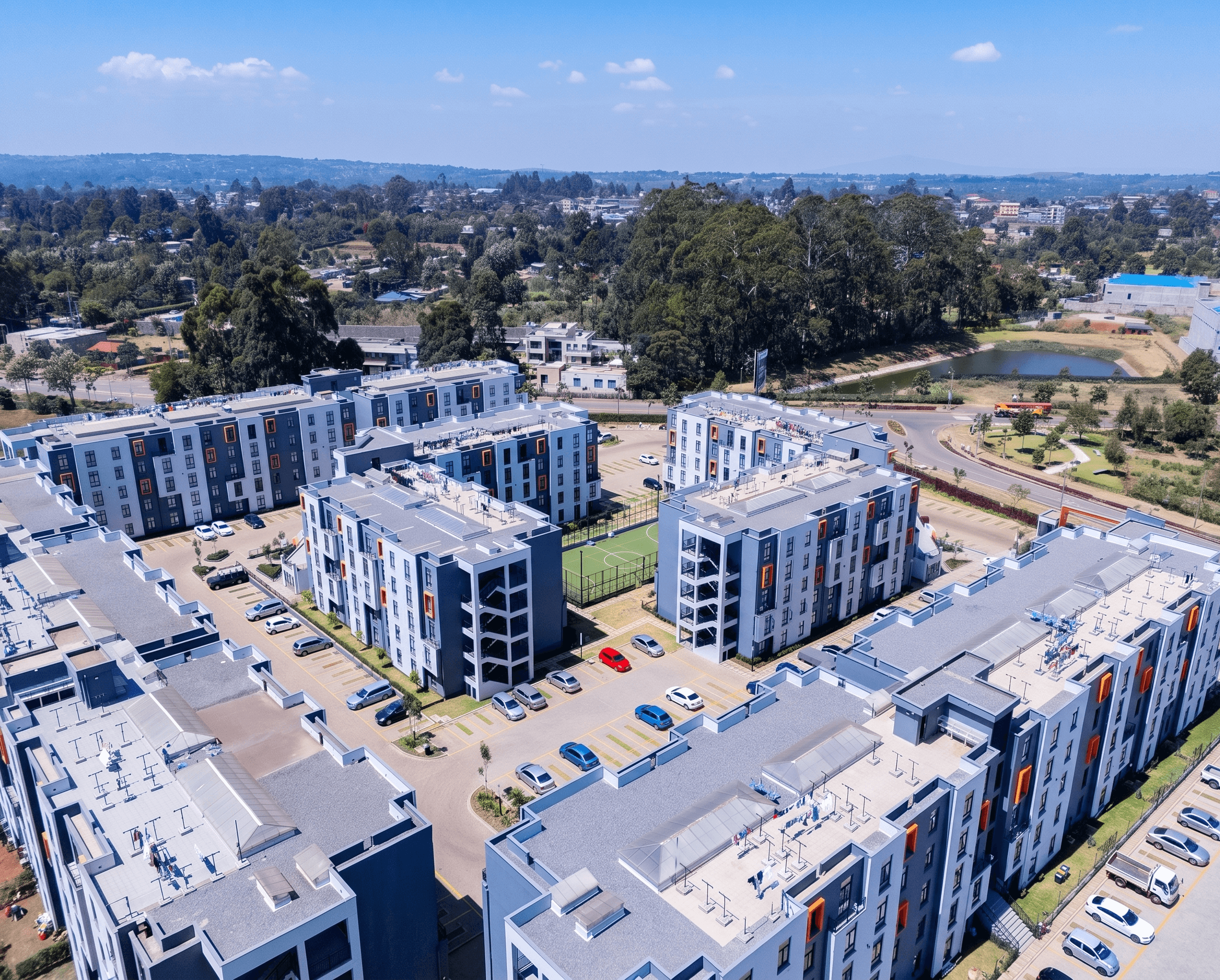
Tilisi is a private, controlled 400-acre masterplan. Height limits, density, spacing — all fixed. No external developer can come in and change what surrounds you. What you see today is what you'll see in ten years.
That kind of certainty is genuinely rare in Nairobi. And rare things hold their value.
The Numbers Back This Up
Mixed-use developments consistently outperform standalone apartments — recording rental yields of 7.3% versus 6.9% for single-use residential, with units in mixed-use settings commanding 20–30% higher rent than comparable standalone units.
At Maisha, we've recorded over 40% price appreciation since 2021 and rental yields of up to 8%. In the same period, Westlands prices were falling and Kilimani developers were discounting inventory to move it.
This isn't luck. It's what happens when a development is planned for real demand from people who actually want to live there and not just passing through.
What We Refuse to Compromise On
There's a version of development in Nairobi optimized purely for unit count. Blocks packed tight. Windows facing other windows. A small room with a trampoline labelled "kids' play area." A pool you reach via a lift.
We don't build like that. The spacing between Maisha's blocks was a deliberate decision — for natural light, for noise reduction, for the feeling of actual space. You walk to the heated pool. Your children play football on a proper multipurpose sports court, outside, in fresh air, with room to move.
These choices cost more. They produce fewer units per acre. They're the choices a developer makes when they're building for the long term — and when they respect the people buying.
The Nairobi market is sorting itself. The buyers who will look back on this period well are those who understood early that value was never in the address. It was in everything surrounding it.
Don't settle for less just because everyone else is.

Gloria Chaki
Marketing Manager, Maisha Developments